1. Executive Summar
The U.S. Department of Transportation (USDOT) and the U.S. Department of Homeland Security (DHS) have announced preliminary results from the second wave of Operation Highway Shield, a joint federal enforcement initiative aimed at improving commercial transportation safety, addressing licensing and regulatory violations, and identifying drivers and vehicles that do not meet applicable safety requirements.
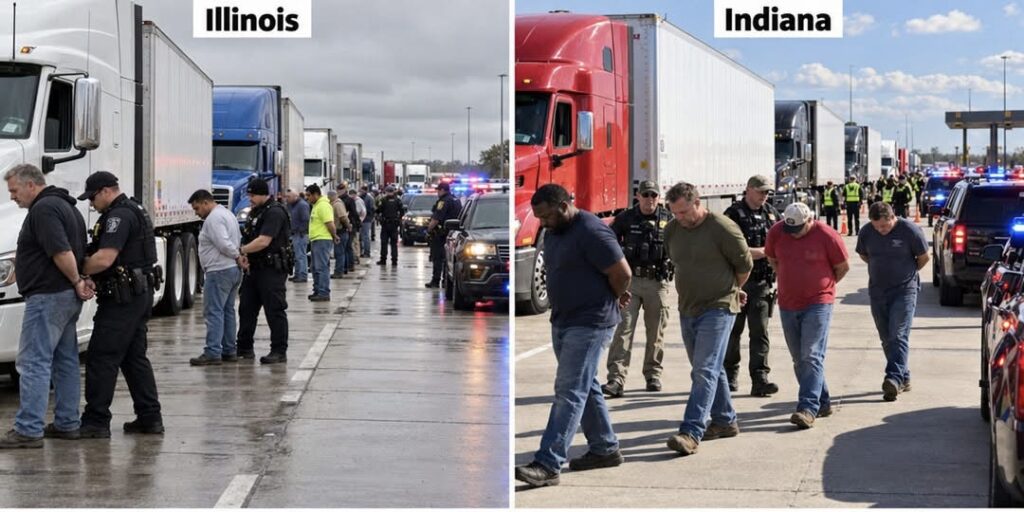
The operation was conducted from July 28 through July 30, 2026, across Illinois, Indiana, Iowa, and Ohio. Federal inspectors worked alongside state highway patrol agencies to conduct roadside inspections and enforcement activities targeting commercial trucking operations.
According to the agencies, the three-day operation resulted in 51 undocumented immigrants being detained, 766 unsafe drivers and vehicles being placed out of service, 86 operators being arrested for dangerous conduct, and 36 violations being issued for failure to meet English Language Proficiency requirements. Authorities also reported recovering nearly $1 million in stolen cargo.
The operation represents part of a broader federal effort to strengthen commercial driver qualification standards, address fraudulent licensing practices, and improve safety across the nation’s highway and freight transportation networks.
2. Overview of Enforcement Activities
Operation Highway Shield is a coordinated enforcement initiative involving the USDOT, DHS, and state law enforcement agencies. The second wave focused on major highway corridors and freight routes in Illinois, Indiana, Iowa, and Ohio.
Participating agencies included the Federal Motor Carrier Safety Administration (FMCSA), U.S. Immigration and Customs Enforcement (ICE), and Homeland Security Investigations (HSI).
Enforcement activities included roadside inspections, driver qualification checks, identification of regulatory violations, and actions against unsafe commercial vehicles and operators.
The operation’s stated objectives included identifying drivers who do not meet applicable commercial licensing requirements, addressing immigration-related violations, enforcing English Language Proficiency standards, and identifying criminal activity associated with commercial transportation operations.
3. Preliminary Enforcement Results
The agencies reported the following preliminary results from the three-day operation:
Undocumented immigrants detained 51
Drivers with non-domiciled CDLs issued by California and New York among those detained. 21
Unsafe drivers and vehicles placed out of service. 766
Operators arrested for dangerous conduct. 86
English Language Proficiency violations issued. 36
Value of stolen cargo recovered. Nearly $1 million|
The reported arrests for dangerous conduct included incidents involving road rage and domestic violence.
The agencies stated that these enforcement activities were intended to address safety risks, identify violations of applicable laws and regulations, and strengthen oversight of commercial trucking operations.
The figures represent preliminary results released by the participating agencies.
4. Statements from Federal Leadership
U.S. Transportation Secretary Sean P. Duffy emphasized the importance of commercial transportation safety and the administration’s efforts to strengthen oversight of the trucking industry.
Duffy stated that the joint initiative with DHS builds on federal efforts to improve highway safety, combat fraud, and strengthen the integrity of commercial trucking operations. He also acknowledged the cooperation between the two departments in addressing concerns involving unqualified and unvetted foreign drivers.
U.S. Secretary of Homeland Security Markwayne Mullin highlighted the relationship between driver qualification, regulatory compliance, and public safety. He noted that the second wave of Operation Highway Shield, together with related enforcement efforts, had resulted in more than 800 dangerous truckers being removed from roadways, according to the agencies’ reported figures.
Mullin also recognized the contributions of Secretary Duffy and state and local law enforcement partners in carrying out the operation.
Federal Motor Carrier Safety Administration Administrator Derek D. Barrs emphasized the need to address unsafe practices and fraudulent activities within the commercial transportation sector.
Barrs identified concerns involving manipulated driver logbooks, fraudulent dispatch operations, and unqualified drivers. He stated that FMCSA’s enforcement approach is intended to support compliant operators while holding those who violate applicable requirements accountable.
5. Results of the First Enforcement Wave
The first wave of Operation Highway Shield was conducted in Florida in March 2026. According to the agencies, more than 3,300 inspections were completed during that operation.
The reported results included:
● 176 drivers placed out of service, including 54 for English Language Proficiency deficiencies.
● 35 individuals arrested on criminal charges.
● 42 individuals taken into custody for violations of federal immigration laws.
The first wave established the operational framework for subsequent enforcement activities and demonstrated the participating agencies’ approach to coordinating inspections, identifying violations, and taking enforcement action.
The second wave expanded the initiative to four Midwestern states, broadening its geographic reach across major transportation and freight corridors.
6. Related Federal Regulatory and Enforcement Measures
Operation Highway Shield forms part of a wider federal effort to strengthen commercial transportation oversight and address unlawful practices involving commercial driver’s licenses and driver training.
6.1 Commercial Driver Training Oversight
FMCSA and Homeland Security Investigations recently announced a joint operation intended to expand USDOT’s efforts to identify and address fraudulent and unlawful practices at commercial driver’s license training schools.
The initiative is intended to strengthen oversight of driver training and licensing processes and improve compliance with applicable federal requirements.
6.2 Commercial Driver Qualification Requirements
In February 2026, USDOT issued a new rule intended to prevent unqualified foreign drivers from obtaining licenses to operate commercial trucks and buses.
The measure forms part of the department’s broader effort to strengthen commercial driver qualification standards and address concerns involving licensing eligibility and regulatory compliance.
6.3 Operation SafeDRIVE
Also in February 2026, FMCSA conducted Operation SafeDRIVE, another enforcement initiative focused on commercial transportation safety.
According to the reported results, the operation led to nearly 2,000 unqualified truckers and unsafe vehicles being removed from American roadways, along with 56 arrests.
These efforts complement Operation Highway Shield by extending enforcement activities to additional transportation corridors and addressing a range of commercial driving and vehicle safety concerns.
7. Broader Enforcement Measures Since April 2025
According to USDOT, the department has undertaken several enforcement measures since President Donald Trump issued an executive order in April 2025 aimed at restoring integrity to the trucking industry.
The department has reported the following actions:
● Approximately 26,000 drivers placed out of service for failing to demonstrate basic English proficiency or read road signs.
● Approximately 8,000 driving schools shut down over identified concerns involving their operations.
● More than 30,000 licenses revoked in connection with improper issuance to unvetted foreign drivers.
These reported actions reflect the administration’s emphasis on commercial driver qualification, licensing oversight, and enforcement against practices considered inconsistent with applicable requirements.
8. Implications for Commercial Transportation Safety
The results of Operation Highway Shield highlight several areas of continued attention for commercial transportation regulators and enforcement agencies.
Driver qualification and licensing: Verification of commercial driver credentials remains a central component of enforcement efforts intended to ensure that operators meet applicable qualification requirements.
English Language Proficiency: Enforcement of language requirements remains a focus of roadside inspections. Compliance with applicable standards is intended to support a driver’s ability to understand road signs, communicate with enforcement personnel, and perform relevant safety-related duties.
Vehicle and operational safety: Placing unsafe drivers and vehicles out of service is intended to prevent identified hazards from continuing to affect public roadways.
Fraud prevention: Investigations involving licensing irregularities, driver training practices, and manipulated records demonstrate the importance of effective oversight throughout the commercial transportation industry.
Interagency coordination: Cooperation among federal agencies and state highway patrols enables enforcement personnel to coordinate inspections, identify potential violations, and respond to safety concerns across multiple jurisdictions.
The reported findings underscore the importance of continued monitoring, consistent enforcement, and compliance with applicable commercial transportation regulations.
9. Conclusion
The second wave of Operation Highway Shield represents a coordinated federal enforcement effort focused on commercial trucking safety, driver qualification, regulatory compliance, and the detection of unlawful activity across major U.S. freight corridors.
Conducted from July 28 through July 30, 2026, in Illinois, Indiana, Iowa, and Ohio, the operation produced preliminary results that included 766 unsafe drivers and vehicles being placed out of service, 51 undocumented immigrants being detained, 86 operators being arrested for dangerous conduct, 36 English Language Proficiency violations being issued, and nearly $1 million in stolen cargo being recovered.
Together with the first wave in Florida and related federal initiatives, the operation forms part of a broader strategy to strengthen oversight of the commercial transportation sector.
Continued coordination among federal regulators, immigration enforcement authorities, and state law enforcement agencies is expected to remain an important component of efforts to improve roadway safety, address fraudulent practices, and promote compliance with commercial transportation requirements.